
Quick Answer
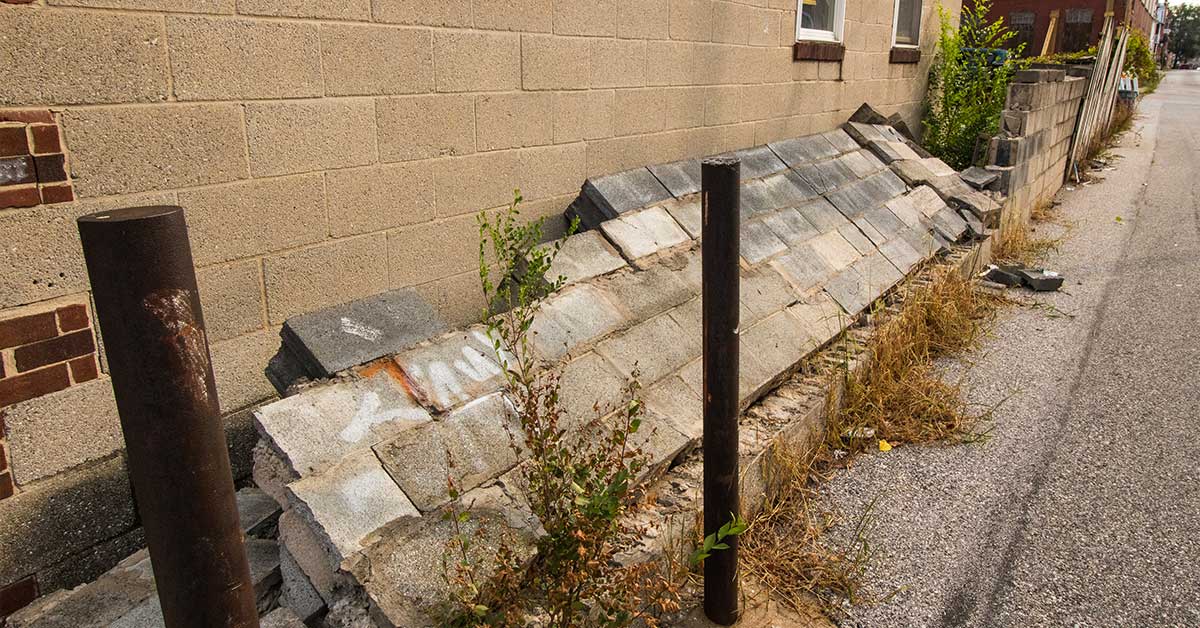
Yes, some leaning retaining walls can be repaired. Whether yours can be saved comes down to what caused the movement, how much of the wall has shifted, and whether the existing masonry and supporting base remain usable. A localized problem may allow part of the wall to be corrected and rebuilt. More extensive movement can limit those options, especially when the wall has lost support underneath or continues to shift.
Why Did the Retaining Wall Start Leaning?
Before deciding whether a wall can be repaired, the contractor needs to understand why it moved.
Water is one of the most common concerns. Retaining walls hold back soil, and that soil becomes heavier when it is saturated. Water trapped behind the wall can also add pressure of its own. Poor drainage, runoff from higher ground, or downspouts that discharge toward the wall can create conditions that gradually push the wall forward.
Movement beneath the wall can have a similar effect. If the supporting soil settles or the base loses stability, the wall may begin rotating rather than remaining upright.
Conditions above the wall can add to the load as well. A steep slope, driveway, or other weight near the top of the wall changes how much pressure the structure must resist.
That is why simply looking at the angle of the wall does not answer the repair question. Two walls may appear to lean by a similar amount while having very different problems behind them.
What Makes a Leaning Retaining Wall Repairable?
Repair becomes more realistic when the problem is limited enough that sound portions of the wall can still be used.
For example, one section may have moved while the rest of the wall remains straight and stable. If the masonry around that section is still in good condition and the underlying support can be corrected, the affected area may be taken apart and rebuilt without disturbing the entire wall.
A repair may also be possible when drainage caused the movement but the wall itself has not suffered widespread damage. Access can sometimes be created behind the affected area so water management and backfill conditions can be corrected before the masonry is restored.
The amount of movement is only one part of the decision. The contractor also needs to consider whether the wall has cracked, separated, bulged, or shifted at its base.
A wall with sound masonry and a clearly identifiable localized problem gives the contractor more to work with than one showing movement across most of its length.
Does Repair Mean Pushing the Wall Back Into Place?
Usually, the answer is more involved than that.
A leaning retaining wall moved for a reason. Straightening the visible face without correcting what pushed it out of position can leave the same pressure working against it.
Depending on the wall, a repair may require excavation behind the affected section. Masonry may need to be dismantled so the supporting base can be inspected or restored. Drainage may need to be added or corrected before the wall is reconstructed.
That can make a repair look much more like masonry reconstruction than a simple patch.
Filling cracks also does not correct wall movement. Cracks can be useful evidence because their location and direction help show how the wall is behaving. Covering them before the underlying condition is understood may hide information without changing the forces causing the damage.
When Is Repair Less Likely to Work?
Repair becomes harder when the problem is no longer confined to a manageable area.
A wall that has rotated across much of its length may have a broader support or pressure problem. Significant bulging, widespread separation, or extensive masonry deterioration can also reduce how much of the original wall is worth preserving.
Continued movement deserves attention as well. If gaps keep opening or the wall changes noticeably after periods of heavy rain, the condition behind the movement may still be active.
The supporting base can ultimately determine what is practical. Reusing a wall only makes sense when the remaining structure has something reliable to sit on.
In those situations, more of the wall may need to come apart so the contractor can correct conditions underneath and behind it. The amount of original material that can be retained should come from what is actually sound rather than from trying to save as much of the existing wall as possible.
What Should a Contractor Look At Before Recommending Repair?
The evaluation should connect the visible movement with the conditions surrounding the wall.
First, the contractor needs to see whether movement is isolated or extends across a larger section. Cracking, open joints, loose masonry, and bulging can help show where the wall has been under stress.
The area behind and below the wall is equally important. Drainage problems, saturated soil, base settlement, or changes in grade can explain why the wall began moving.
Existing masonry also needs to be worth saving. Brick, block, stone, and mortar that remain sound may be reused or incorporated into a repair. Material that is already badly deteriorated gives the contractor fewer reliable options.
The useful question is not simply, “How far is it leaning?” It is, “What is still sound, and can the cause of the movement be corrected?”
Frequently Asked Questions
Will a Leaning Retaining Wall Keep Moving?
It can if the condition causing the movement remains active. Continued drainage problems, soil movement, or settlement beneath the wall can allow the lean to progress. Changes after heavy rain or widening cracks are worth having evaluated.
Can Only One Section of a Retaining Wall Be Repaired?
Yes, in some cases. Localized movement may allow the affected section to be dismantled and reconstructed while stable portions remain in place. The contractor first needs to confirm that the movement has not affected the wall more broadly.
Does a Leaning Retaining Wall Always Mean the Foundation Failed?
No. The movement may involve drainage, soil pressure, localized settlement, or several site conditions working together. The supporting base should still be evaluated because it plays a major role in determining whether repair is practical.
Find Out Whether Your Retaining Wall Can Be Repaired
A leaning retaining wall does not automatically mean the entire structure is lost. The repair options come from what caused the movement, how much of the wall remains sound, and whether the conditions behind it can be corrected.
Call (423) 208-4275 or schedule a retaining wall estimate online with All About Concrete & Masonry.